 Digital Twins
What is a Digital Twin?

Digital Twins
Maximize your business value:
What is a Digital Twin?
A digital twin is a virtual replica of a physical entity, system, or process that simulates its real-time performance and behavior. By using real-time data, digital twins enable analysis, optimization, and predictive maintenance, allowing organizations to enhance decision-making and improve efficiency across different uses.
This concept allows organizations to visualize and analyze the performance of assets, from individual machines to entire manufacturing plants or urban infrastructures. By integrating sensors and IoT technology, digital twins provide a continuous flow of data that reflects the real state of the physical counterpart, allowing for better decision-making.
The potential applications of digital twins are wide-ranging and span multiple industries. In manufacturing, they facilitate predictive maintenance by monitoring the status of equipment and forecasting potential failures before they occur. In healthcare, they can simulate patients' response to treatments, enabling personalized medicine. Similarly, in smart cities, they can model traffic patterns and resource use to optimize urban planning and sustainability. The possibilities are endless.
One of the main advantages of adopting digital twin technology is its ability to improve the way things work and reduce costs. This technology allows organizations to generate simulations and test scenarios, identifying potential problems and optimizing processes without interrupting real operations. In this way, it not only improves performance, but also accelerates innovation, as it allows experimentation with new ideas in a virtual environment without risk before their application in the real world.
Benefits of Digital Twins
Performance monitoring in real time
Digital twins allow for the continuous monitoring of equipment and systems, facilitating the tracking of performance metrics in real time and the adoption of immediate corrective measures if any deviation occurs.
Scenario simulation for design optimization
In product development, digital twins allow engineers to simulate different designs and evaluate their performance in different situations. This makes it possible to identify the most optimized designs before building physical prototypes.
Condition-based maintenance
By analyzing live data from sensors, digital twins facilitate condition-based maintenance strategies. In this way, maintenance is carried out only when performance metrics indicate potential problems, rather than at predetermined times, extending the useful life of assets.
Supply chain optimization
Digital twins can model entire supply chains, allowing businesses to visualize and analyze the flow of materials and information. This capability helps identify vulnerabilities, optimize inventory levels, and improve logistics.
Enhanced user experience
Digital twins can also simulate user interactions with products or services in the consumer sector, allowing for the refinement of user interfaces and functionalities based on predicted behaviors, resulting in more intuitive and satisfying customer experiences.
Training and skill development
Digital twins can also be used as training platforms for employees, giving them the possibility to interact with realistic simulations of equipment or systems. This hands-on experience can improve learning and skill acquisition without the risks of operating real machinery.

Digital Twin Solutions - Globant’s Approach
Globant’s innovative Digital Twin Solutions, accelerated by NVIDIA, empower organizations to transform and enhance their operations. By integrating cutting-edge technologies such as data analytics, simulation, and artificial intelligence, our experts can create digital replicas of physical assets, processes, and systems:
- Digital Twin Development: Globant provides end-to-end solutions, utilizing OpenUSD and NVIDIA Omniverse™, to monitor, simulate, and optimize asset performance. By making lively 3D visual replicas, companies can visualize their designs in real time, facilitating a better understanding of how they perform under various conditions. Additionally, the integration of physics-driven simulations using platforms like Unreal and Unity allows users to evaluate different operational scenarios before implementing them in the real world.
- Digital Twin Humans: To enhance emotional connections with customers, Globant offers Digital Twin Humans services utilizing NVIDIA Avatar Cloud Engine (ACE). These solutions include the creation of lifelike, customizable avatars that act as brand ambassadors. Equipped with artificial intelligence, these metahumans are designed to interact authentically and enhance customer engagement, aligning seamlessly with the brand's voice and vision across all platforms.
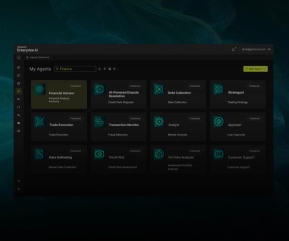
- Digital Twin Processes: Regarding Processes, we help organizations unlock new levels of operational efficiency through process mining and AI. Our platform, Navigate, enables real-time mapping of processes, identifying bottlenecks, and optimizing workflows. This integration of Digital Twin technology with existing enterprise systems provides improved visibility and streamlined operations.
Globant is the ideal partner for implementing digital twin solutions, equipping companies with the tools they need to optimize operations, improve customer experiences and foster innovation.
More about Digital Twins
Frequently Asked Questions
How do digital twins work?
Digital twins function by creating a dynamic virtual model of a physical object, system, or process that reflects real-time data through sensors and IoT technology. This model continuously receives data from its physical counterpart, allowing it to simulate its behavior and performance under various conditions. Leveraging advanced analytics and machine learning, digital twins can provide insights, predict outcomes and enable proactive decision-making. This interconnectedness ensures that organizations can monitor performance, identify inefficiencies and optimize operations quickly and effectively.
What are the different types of digital twins?
There are several types of digital twins, each serving distinct purposes:
• Product Digital Twin: This type represents a specific product throughout its life cycle, assisting in design, manufacturing and maintenance. It allows the performance of a product to be simulated in real conditions and enables improvements to be made prior to production.
• Process Digital Twin: This second type of twin focuses on simulating and optimizing workflows and business processes. By mapping processes in real time, organizations can identify bottlenecks and streamline operations.
• System Twin: As the name suggests, these twins encompass interconnected systems, such as entire supply chains or smart cities, and enable holistic monitoring and management of complex interdependencies. Their advantage is that they provide information on how the different components interact and affect overall performance.
• Component Twin: This twin offers a digital representation of individual components within a larger system. Its main benefit is that it allows for detailed monitoring and analysis of specific parts, facilitating maintenance and ensuring optimal performance of each one.What are digital twins used for?
Digital twins can be used in different sectors and for multiple applications, some of which are:
• Predictive Maintenance: This is one of the main uses as it allows for the anticipation of equipment failures and proactive maintenance scheduling to reduce downtime.
• Product Development: Testing designs and concepts in a virtual environment to refine products before physical production.
• Operational Optimization: Another important use of this technology is the ability to analyze processes to identify operational inefficiencies and improve overall performance.
• Training and Simulation: Digital twins also serve to provide realistic training environments for employees, allowing them to practice skills and scenarios without the risks of physically operating the equipment.
• Customer Engagement: In terms of uses to improve customer engagement and experience, they can also be used to improve interactions through human digital twins, which can act as brand ambassadors or support agents.How are digital twins created?
Creating a digital twin involves several key steps:
• Data Collection: The first step in the process of creating any agent is data collection. This data is often extracted from sensors, IoT devices, and existing systems in order to gain an in-depth understanding of the physical asset or process.
• Model Development: The next step is the design of the virtual model based on the previously collected data. Advanced simulation and modeling tools are often used in this process to ensure accuracy.
• Integration: The next step is to connect the digital twin to real data streams to enable real-time updates and performance monitoring. This integration ensures that the digital twin reflects the current state of its physical counterpart.
• Continuous Improvement: In the final stage, as the physical asset or process evolves, the digital twin is updated with new data and knowledge, and this is what allows it to adapt and improve over time. This iterative process ensures that the digital twin remains relevant and valuable for decision-making over time.