AI agents can perform individual tasks, but enterprise operations require multiple capabilities to work together. AI agent orchestration connects agents, models, enterprise data, tools, and workflows to coordinate execution toward business goals. This allows organizations to move beyond isolated AI implementations and integrate intelligent capabilities into broader operational processes.
Why Do Enterprises Need Agent Orchestration?
As organizations adopt AI agents across different business functions, disconnected implementations can create fragmented workflows, duplicated tasks, and limited visibility into execution. Agents may perform individual tasks effectively, but without coordination, information can get lost between steps and complex processes become harder to manage.
AI agent orchestration helps enterprises coordinate tasks, share relevant context, and manage dependencies across workflows, connecting individual capabilities into more cohesive business processes.
Industries have different operating models, business priorities, data environments, and challenges. AI agent orchestration can connect specialized capabilities to these contexts, helping organizations integrate AI into their processes and address industry-specific needs. At Globant, AI Studios bring together industry expertise and AI-driven capabilities to help businesses across industries adopt AI, develop tailored solutions, and transform the way they operate.
Rather than relying on generic AI implementations, industry-specialized AI capabilities combine AI execution with domain expertise to address the requirements of each vertical.
The Components of an AI Agent Orchestration Layer
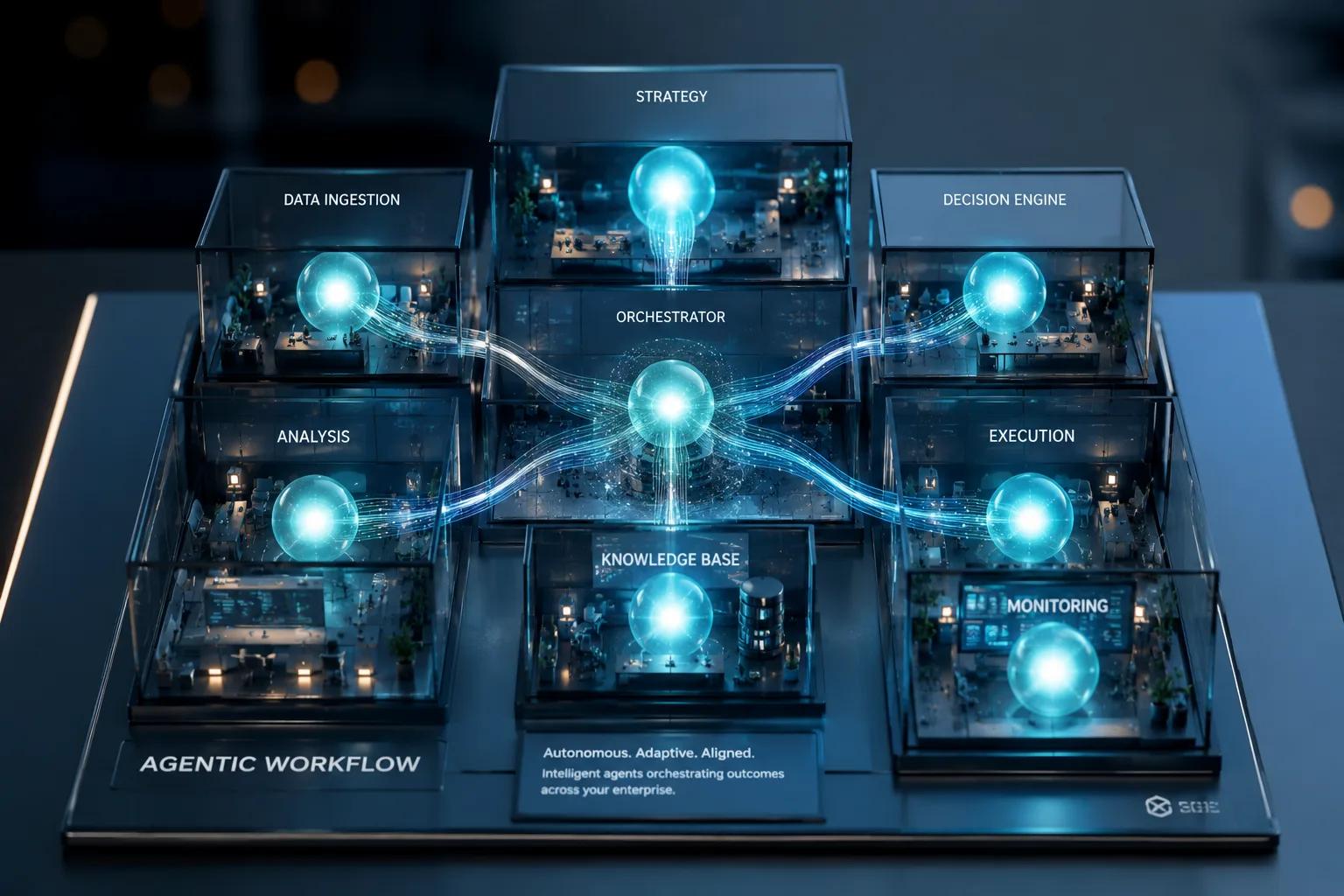
An AI agent orchestration platform connects the capabilities required for coordinated execution:
- Agents: Perform specialized tasks.
- Models: Enable reasoning and task processing.
- Data and context: Provide enterprise knowledge and relevant information.
- Tools and APIs: Connect agents to systems and operational capabilities.
- Workflows: Coordinate tasks, dependencies, and execution.
- Human intervention: Enables validation, decisions, and exception handling.
Together, these components form an AI agent architecture designed to connect individual capabilities with broader enterprise workflows.
Single-Agent vs. Multi-Agent Architectures
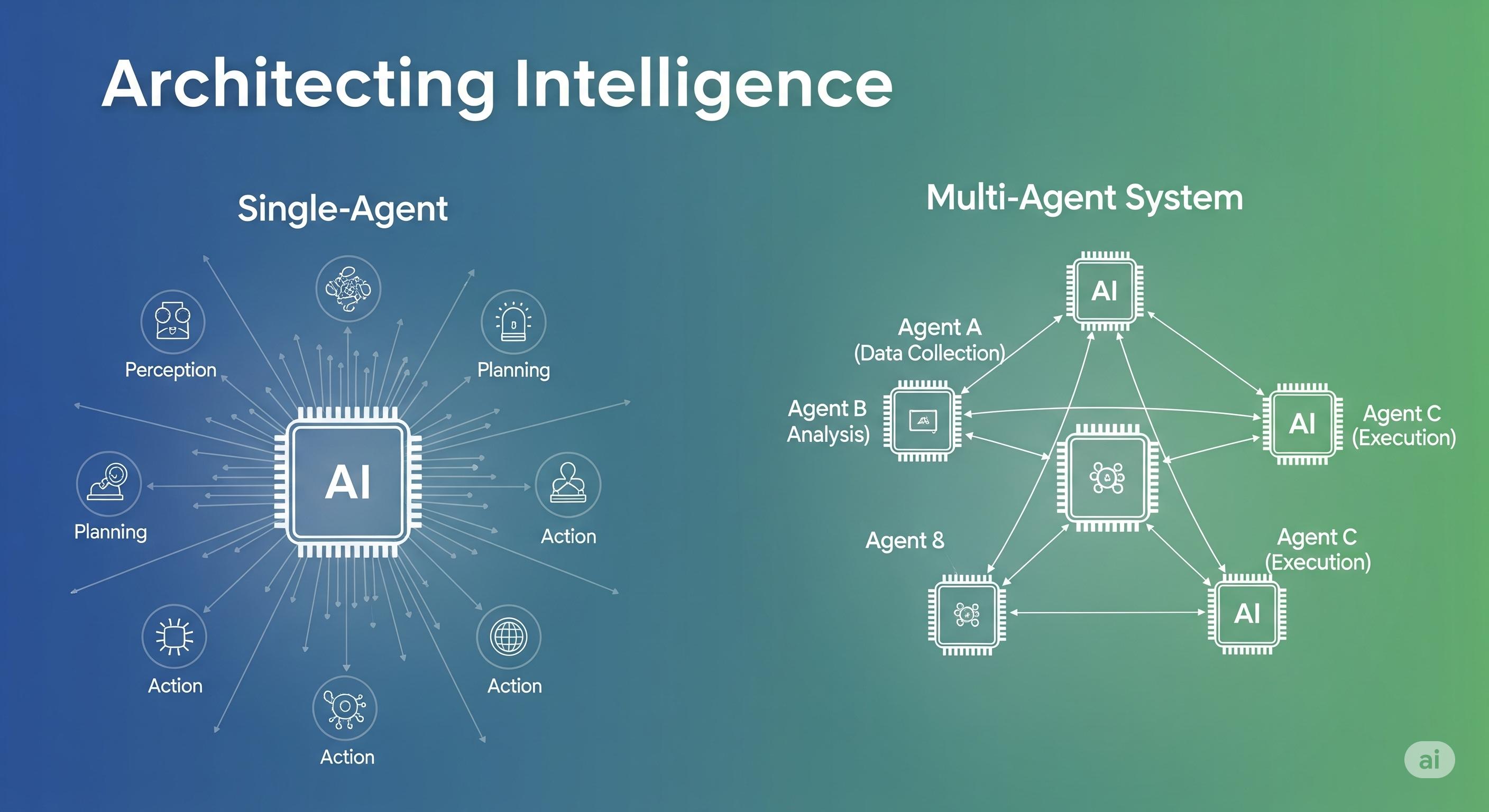
Not every business process requires multiple AI agents. A single-agent architecture can handle well-defined tasks by combining reasoning, tools, and execution within one agent. This approach works well when processes are straightforward, dependencies are limited, and tasks do not require multiple specialized capabilities.
As workflows become more complex, multi-agent orchestration enables specialized agents to collaborate, dividing work according to their capabilities and coordinating execution across multiple steps. One agent may execute a task, another review the output against requirements, and automated tests verify its accuracy before the work moves forward.
This approach introduces additional layers of coordination and validation, helping enterprises manage complex workflows while maintaining visibility into execution. The architecture should match the work: simpler tasks may need only one agent, while more demanding processes benefit from specialized agents and coordinated execution.
The right approach depends on task complexity, system dependencies, execution requirements, and the level of validation needed. Orchestration connects these capabilities without introducing unnecessary complexity.
Human-in-the-Loop vs. Autonomous Execution
Autonomous AI execution does not mean removing human oversight. Enterprise orchestration defines how agents execute tasks independently, how outputs are validated, and when human intervention is required. Depending on task complexity and risk, workflows can combine automated execution, agent reviews, testing, and human approval.
A supervised execution model can include multiple validation layers before work is delivered:
- Agent self-review: The execution agent checks its output against defined requirements.
- Cross-agent review: A second agent evaluates the work, identifying discrepancies or missed requirements.
- Automated testing: Scripts and tests verify technical criteria before human review.
- Expert validation: Forward Deployed Engineers (FDEs) review, refine, approve, or reject outputs.
- Client acceptance: The client validates the deliverable against agreed requirements.
This layered approach allows AI agents to execute autonomously while maintaining human accountability, quality controls, and visibility throughout delivery.
Orchestration and Enterprise Governance
As AI agents interact with enterprise systems and data, orchestration must operate within defined boundaries. Access permissions, monitoring, validation, traceability, and escalation mechanisms help organizations maintain visibility into how agents execute and when human intervention is required.
How Agent Orchestration Enables AI-Native Delivery
Orchestration connects individual AI capabilities into coordinated execution. In Glob.AI, AI Pods bring this approach into enterprise delivery through specialized capabilities organized around documented workflows and defined outputs. Each Pod follows a structured, supervised way of working, aligning AI execution with specific technology or operational needs.
By connecting agent capabilities with business requirements, enterprises can move beyond isolated AI tasks toward coordinated execution, validated outputs, and AI-Native Business Outcomes.

