AI copilots changed how people interact with technology. They made it easier to generate content, analyze data, write code, and support decisions through natural language. But assisting with individual tasks is only the beginning of what AI can do for an enterprise.
The next evolution is AI agent execution: systems that can work toward defined goals, use enterprise tools and data, and coordinate tasks across connected workflows. Instead of responding to each prompt, AI agents can move work forward within defined boundaries, with human experts providing supervision and accountability. This shift from AI assistance to autonomous execution is central to how enterprises can turn AI capabilities into measurable business outcomes.
The Copilot Era Changed How People Work
AI copilots or AI assistants introduced a powerful new way for people to interact with corporate technology ecosystems. Instead of navigating every single step of a technical or creative task manually, employees could suddenly use natural language to generate content, analyze complex data sets, write code foundations, or get immediate support with strategic decisions. This evolution changed the historical relationship between human professionals and their tools, transforming software from a passive utility into an active assistant within everyday corporate workflows.
For many global organizations, the deployment of copilots also became an incredibly accessible and low-risk starting point for broad AI adoption. They made intelligent capabilities instantly available within familiar enterprise workflows without requiring businesses to undergo the painful process of redesigning their entire operating model from scratch.
But as valuable as this conversational assistant model is, it still places the human professional firmly at the absolute center of execution. In the copilot framework, the user must define every task, prompt the system, review the raw response, correct errors, and decide what happens next. This approach exposes a natural ceiling: it limits the velocity of the enterprise to the capacity of the individual human operator, revealing the next logical challenge: What happens when technology can do more than assist with isolated tasks?
Why AI Assistance Is No Longer Enough
AI assistance can improve individual tasks, but business outcomes depend on connected processes. Enterprise workflows span research, planning, implementation, and review, often requiring people to coordinate tools, transfer context, and manage handoffs.
The challenge is moving beyond isolated productivity gains to workflows that can execute from goal to outcome. This requires autonomous AI: systems that coordinate tasks, use enterprise tools, and move work forward within defined boundaries. The shift is from AI that helps people do the work to AI that can execute it.
From AI Assistance to AI Agent Execution
AI agents move beyond the traditional copilot model by working toward defined goals, accessing relevant information, using enterprise tools, and executing connected tasks without requiring human prompts at every step.
This shifts AI from generating responses to participating in enterprise execution. An agent can gather data, perform defined tasks, and deliver an output for human review.
Autonomy still requires boundaries. In Glob.AI, AI agents handle research, planning, and implementation, while human experts supervise the work. This approach to AI agent execution connects tasks into coordinated workflows, balancing autonomous action with human oversight and accountability.
What Autonomous Delivery Means for Business
For global enterprises, autonomous delivery is not about removing people from the corporate lifecycle or allowing black-box AI systems to act without commercial limits. Instead, it enables software agents to execute defined work across a workflow while maintaining the absolute supervision, validation, and accountability required for enterprise-grade compliance. In this context, true autonomy depends on how execution is organized. Some low-risk activities may be handled by agents with minimal intervention, while high-risk milestones require human review, approval, or direction before moving forward.
The objective is to connect execution to a meaningful, scalable delivery process, not to maximize autonomy for its own sake. This distinction matters deeply for enterprise buyers. A system that generates an isolated response is useful, but an AI-native delivery model must move work toward an output that can be audited and validated. In the Glob.AI model, this principle is reflected in the Execute. Validate. Compound. approach: agents execute work, human experts validate outputs, and supervised interactions become institutional knowledge that improves future cycles. Autonomous delivery, then, is about making enterprise execution repeatable, completely visible, and connected to business outcomes.
How AI Agents Turn Workflows into Execution
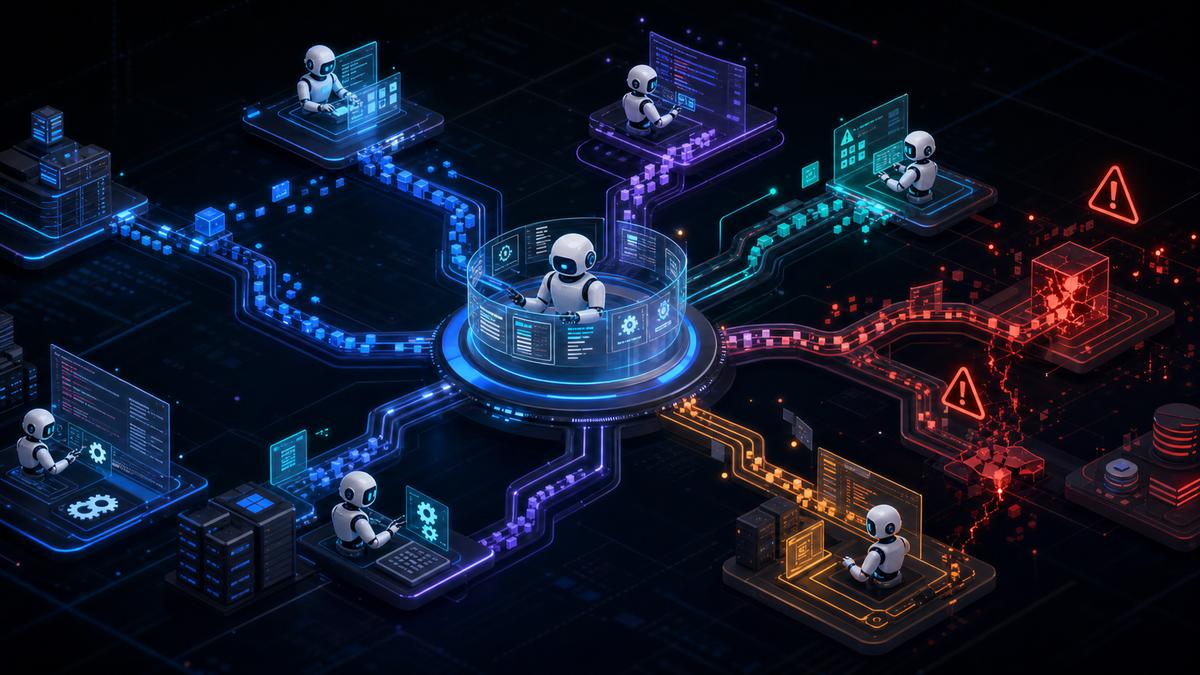
Enterprise work involves multiple activities, systems, and decisions. Agentic workflows connect these steps so multiple AI agents can contribute to a broader business process.
A structured workflow typically involves:
- Defining the goal: Establishing the task, expected output, and constraints.
- Gathering context: Accessing relevant data and knowledge.
- Planning execution: Selecting the steps, tools, and agents required.
- Taking action: Executing tasks across available systems.
- Validating outputs: Checking results, with human review where needed.
- Capturing knowledge: Recording learnings to improve future work.
Not every step needs to be autonomous. The level of autonomy and supervision should reflect the task's complexity and risk. In Glob.AI, Forward Deployed Engineers (FDEs) supervise and validate agent outputs before they reach the client environment.
The opportunity is to move beyond isolated AI tasks toward connected agentic workflows that deliver validated outcomes and improve over time. Consumption is measured in Supervised Tokens; units tied to validated AI output rather than time spent, which structurally aligns incentives around outcomes for both sides.
Orchestrating AI Agents for Business Outcomes
As workflows become more complex, enterprise execution depends on more than individual agents' capabilities. The ecosystem needs an orchestration layer to coordinate how those agents, models, tools, data, and people work together. An orchestration layer helps determine which agent should perform a specific task, what context it needs, which models it can use, and exactly when work should move to another agent or a human reviewer.
Without strategic orchestration, organizations may end up with multiple AI agents operating as disconnected silos. Each may perform a specific task faster, but the broader workflow can still depend on manual coordination and human handoffs. With orchestration, enterprises can design how work moves across systems and define where human validation is required. This is especially relevant as organizations move toward AI-native delivery, where the challenge is no longer only what an individual agent can do, but how multiple capabilities work together to complete a business process in a controlled, repeatable way.
In Glob.AI, the AI Pods Hub acts as the orchestration control layer, providing visibility into active pods, token allocation, and where human validation is required. This connects agent execution with the operational oversight needed to coordinate workflows and keep delivery aligned with defined business outcomes.
Human Oversight Makes Autonomous AI Accountable
Greater autonomy does not make human expertise less important; it changes where it is needed. AI agents can execute tasks, but enterprise delivery still requires business context, judgment, and accountability to ensure outputs meet requirements.
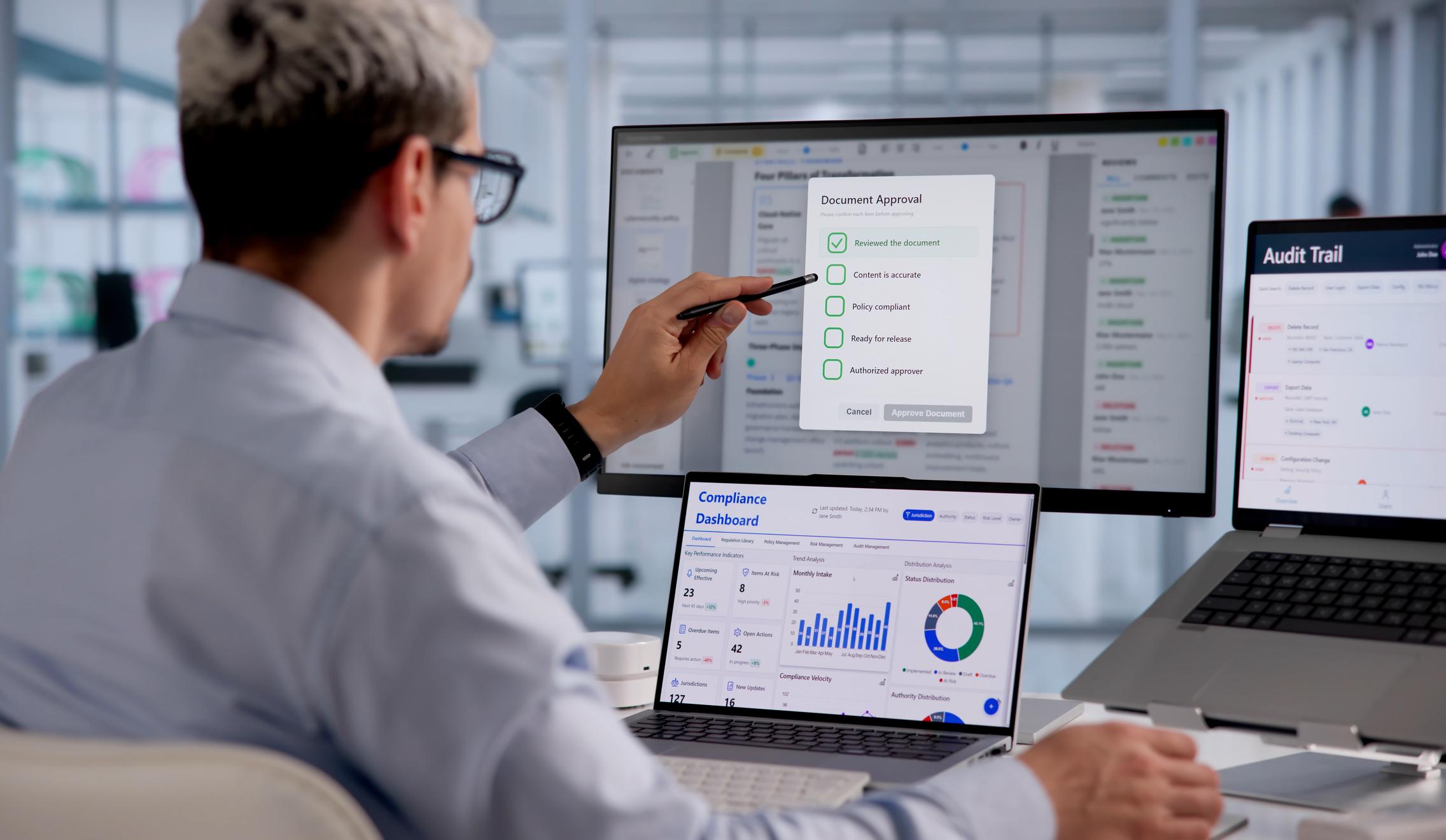
In Glob.AI, Forward Deployed Engineers (FDEs) supervise every step and validate every output before it reaches the client environment. They are accountable for the work, not just occasional spot-checks.
This approach combines autonomous execution with human oversight, keeping AI aligned with business needs without requiring human intervention at every step. The goal is to scale execution without compromising quality or responsibility.
From Agentic AI to AI-Native Delivery
Agentic AI workflows make it possible to coordinate execution across multiple corporate activities. But the larger transformation happens when this approach becomes part of how technology services are designed and delivered. AI-native delivery goes beyond introducing agents into existing legacy processes; it organizes delivery around the combined capabilities of AI agents, human expertise, enterprise knowledge, and governance.
In this model, AI execution is not an isolated feature or an additional productivity tool. It is part of the delivery approach itself. That can change how technology work is structured: from fixed sequences of human-led tasks to coordinated workflows; from knowledge held within individual projects to knowledge that can be captured and reused; and from measuring activity alone to validating the outputs that matter. The Glob.AI model reflects this direction through its focus on continuous execution, human validation, and compounding knowledge. Its approach frames software delivery as a continuous service rather than a fixed-term project. This is where the evolution from copilots to autonomous delivery connects with AI-Native Business Outcomes: business results produced through AI-enabled execution, validated against defined requirements, and measured against clear business objectives. Value comes from workflows that deliver work enterprises can verify, improve, and connect to their priorities.
How AI Pods Turn Autonomous Execution into Business Outcomes
AI Pods bring agentic execution into a structured service model. In Glob.AI, each pod combines specialized capabilities, curated industry knowledge, and defined outputs to support governed enterprise delivery.
The Glob.AI Agent helps identify relevant AI Pods, while the AI Pods Hub provides visibility into activity, budgets, and output validation. Together, they connect AI agents, orchestration, and human oversight in a transparent delivery environment where knowledge can compound over time.
Autonomous delivery is not about replacing people. It is about combining human expertise and AI execution to deliver measurable business outcomes.

