
Construction Industry
Elevate your construction management with cutting-edge technology that enhances safety, efficiency, and sustainability. We can build a future in which your business takes the lead in innovation.
Scroll Down
The construction industry is going through a transformative phase driven by the integration of advanced construction technology (ConTech). Digital transformation in construction is driving groundbreaking innovations such as AI, digital twinning, and robotics, all aimed at enhancing productivity, reducing costs, and optimizing worker safety.
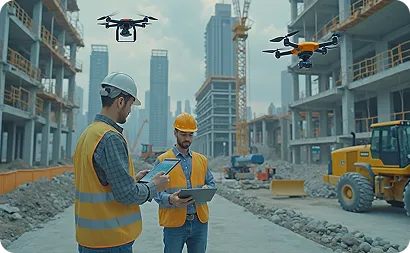
With more adaptable supply chains, streamlined processes, and seamless integration of various technologies, construction companies can increase efficiency, reduce error rates, and improve teamwork among all parties involved.
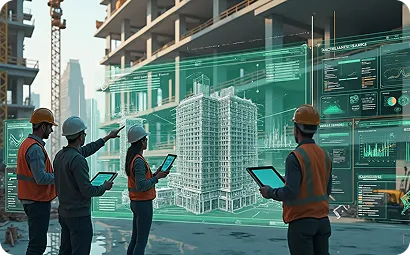
This holistic approach to design, construction, and maintenance, combined with revolutionary technologies, enables companies to tackle today's challenges and lead the way to a more sustainable and prosperous future in the construction sector.
Construction Industry in numbers
$15.2 T
is the projected size of the global construction market by 2030, up from $10.2 trillion in 2020.
$14.4 T
is the expected value of the construction technology market by 2030, doubling from $6.4 trillion in 2022.
$10.7 B
is the expected value of the Building Information Modeling (BIM) market by 2026, growing from $5.4 billion in 2020.
Globant Capabilities
Globant harnesses its Core Studio to revolutionize the industrial and construction sectors through ConTech solutions that elevate performance, optimize efficiency, and drive productivity to new heights.
What is the Digital Transformation of the Construction Industry?
Digital transformation in the industrial and construction sectors is about integrating ConTech solutions like artificial intelligence (AI), building information modeling (BIM), and robotics into all stages of construction projects. This approach addresses the industry's critical challenges, such as productivity gaps and environmental concerns. By adopting digital tools and processes, construction companies can enhance safety and efficiency, streamline workflows, and build a more resilient and innovative future.
By adopting diverse digital tools and innovative processes, construction companies can significantly improve safety protocols and operational efficiency, optimize project workflows, and foster a culture of resilience and innovation.
What are the four main areas of digital transformation in the Construction Industry?
The four primary areas of transformation in the industrial and construction sectors include:
- Digital twins to improve building modeling and performance through real-time information while optimizing energy use throughout the asset's life.
- Artificial intelligence (AI) for precise budgeting, proactive maintenance, timely risk notifications, and effective site management enhances safety and performance.
- Augmented reality (AR) and virtual reality (VR) to boost training effectiveness, improve project planning accuracy, and promote better stakeholder collaboration through immersive simulations.
- Robotics is applied to repetitive tasks to improve worker safety, enhance productivity, and tackle skilled labor shortages.
What is the future of AI in Construction?
The future of AI in construction is revolutionary, driving significant advances in safety, efficiency, and the management of giga projects. As next-generation technologies evolve, we can expect innovations such as immersive experiences and enhanced capabilities in areas like predictive analytics for risk management, automated budgeting, real-time monitoring of construction sites, workflow optimization, cost reduction, and increased efficiency in team collaboration. The integration of artificial intelligence with advanced technologies like IoT and robotics will also foster operational agility and contribute to long-term sustainability goals. Embracing AI and next-generation technologies will enable companies in the industrial and construction sectors to lead innovation and adapt to the changing demands of the market.
EVERY PROJECT STARTS WITH A PLAN.